A diagnosis of dementia often brings fear and uncertainty — especially when it comes to relationships, intimacy, and love. Many partners and family members worry that the emotional connection will fade as memory and cognition change. But research and lived experience tell a more hopeful story.
According to Caring for the Ages, people living with dementia can and do continue to experience meaningful relationships, affection, and love — even as their abilities change. Dementia may reshape how relationships look, but it does not eliminate the human need for connection, closeness, and companionship.
👉 Read the full article from Caring for the Ages
At Dolan Memory Care, we see every day that love remains possible — and powerful — throughout the dementia journey.
Dementia Changes Relationships — But It Doesn’t End Them
Dementia affects memory, communication, and behavior, which can understandably alter relationship dynamics. Partners may grieve changes in personality or shared routines, and those feelings are valid. As the Caring for the Ages article notes, it is natural to feel sadness over these losses.
However, a change in cognition does not erase the person or their capacity for emotional connection. Many couples discover that while their relationship looks different, it can still be deeply meaningful.
Love Exists Beyond Memory
Even when memories fade, emotional memory often remains. Individuals living with dementia may not recall names, dates, or events, but they can still experience:
- Comfort from familiar people
- Joy in shared activities
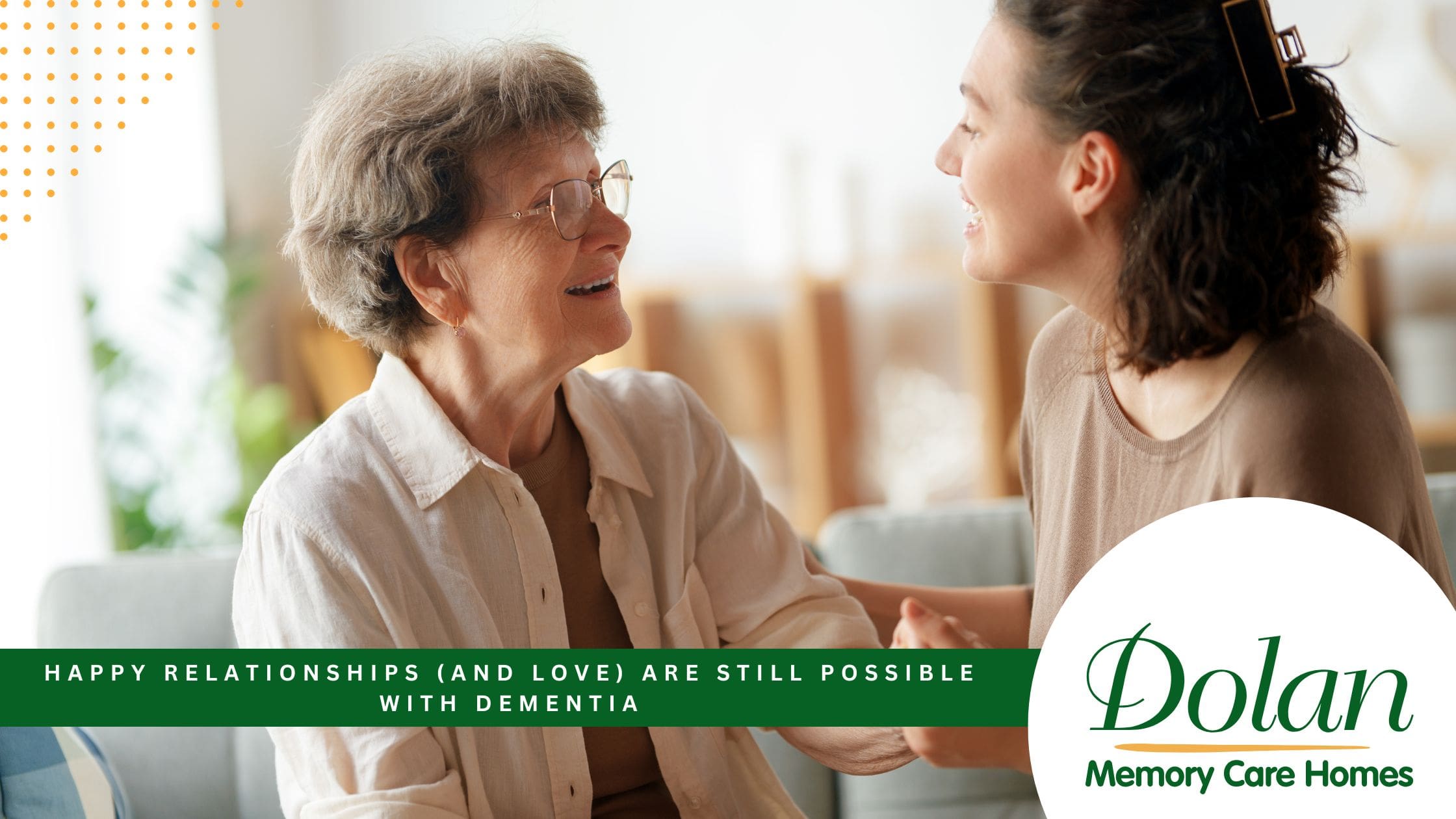
- Affection through touch, laughter, or presence
- A sense of safety and belonging
The Caring for the Ages article emphasizes that relationships can thrive when partners focus less on remembering the past and more on being present in the moment. Simple acts — holding hands, listening to music, sharing a meal — can become profound expressions of love.
Redefining Intimacy and Connection
Intimacy is not limited to conversation or memory. Emotional closeness, physical affection, and companionship remain important for many people living with dementia.
Research highlighted in Caring for the Ages supports the idea that love, intimacy, and relationships continue to matter deeply to individuals with cognitive decline. Connection may be expressed differently, but it is no less real.
Partners often find success by:
- Communicating through tone, facial expression, and touch
- Adjusting expectations around conversation and recall
- Letting go of correction and focusing on reassurance
When Roles Change, Love Can Still Lead
As dementia progresses, relationship roles may shift. A spouse or partner may take on caregiving responsibilities, which can feel overwhelming at times. The Caring for the Ages article notes that many caregivers ultimately view caregiving as an extension of love — a continuation of commitment rather than the end of partnership.
Reframing caregiving as an act of compassion and connection can help couples navigate these changes with greater understanding and emotional resilience.
The Importance of Support
Maintaining healthy relationships through dementia is not something families should do alone. Education, counseling, and dementia-informed care environments play a crucial role in supporting both individuals and their loved ones.
At Dolan Memory Care, we prioritize:
- Relationship-centered dementia care
- Emotional well-being for residents and families
- Environments that support dignity, connection, and affection
Our approach recognizes that relationships don’t disappear with dementia — they evolve.
Final Thoughts
Dementia may change how love is expressed, but it does not erase the need for connection, intimacy, and belonging. With patience, compassion, and the right support, happy relationships — and love — are still possible with dementia.
At Dolan Memory Care, we honor the emotional lives of those we care for and support families in navigating the journey together, with empathy and hope.